

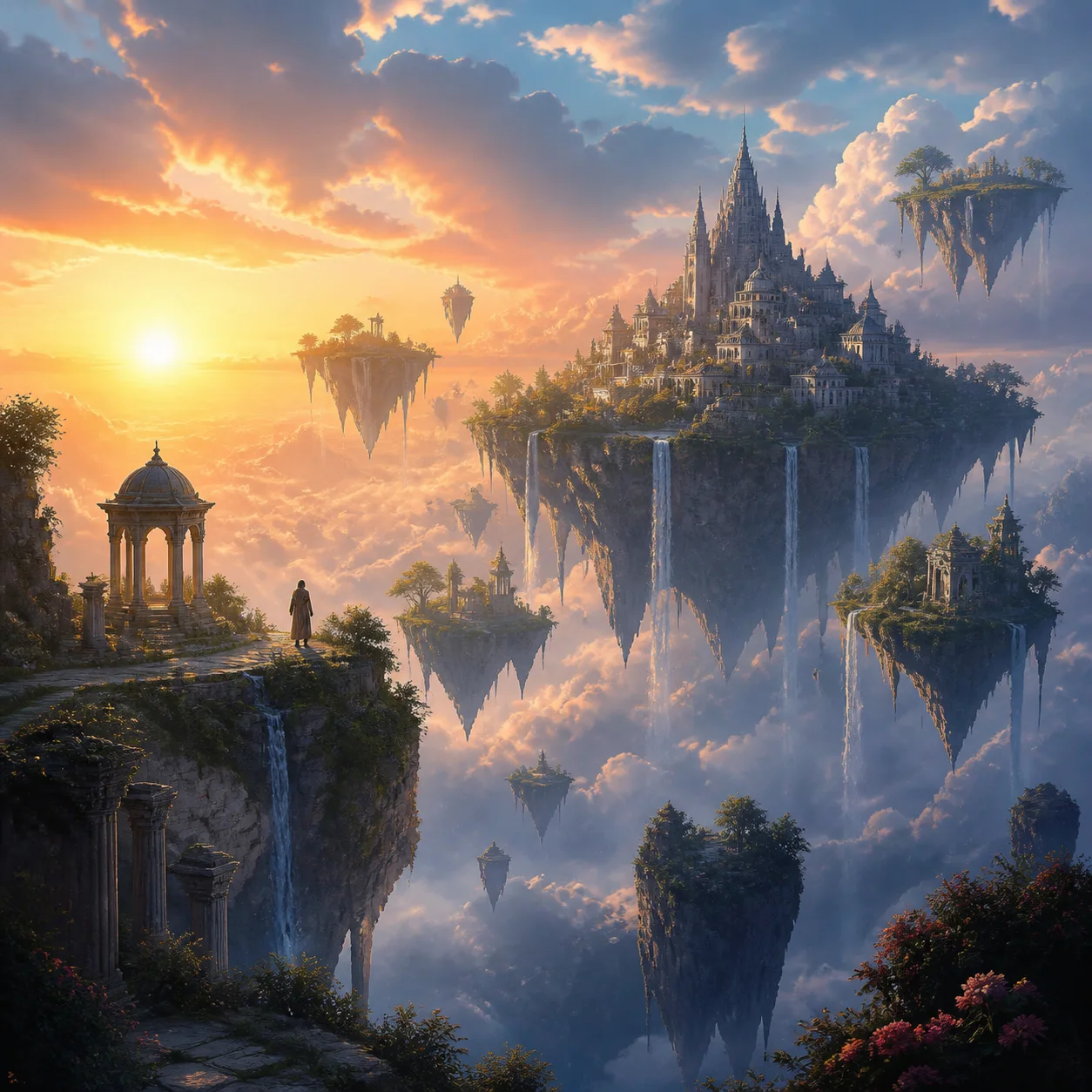
Visual characteristics
Turn a portrait, animal, object, or scene into fantasy artwork with magical light, mythical details, and an imagined environment.
Fantasy art combines recognizable subjects with imagined environments, mythical materials, atmospheric light, and details that suggest history or magic. A clear main subject keeps the invented world from becoming cluttered.
Subjects that suit this style
- Costume portraits and character poses
- Castles, forests, mountains, and ruins
- Animals, props, and objects suited to mythical reinterpretation
Recommended reference images
- Choose a subject with a strong pose or silhouette and enough surrounding space for world building.
- Costume, texture, and directional light provide useful anchors for imagined details.
- Avoid tightly cropped images when the environment is central to the idea.
How to apply the Fantasy AI Filter
Choose a suitable reference
Choose a subject with a strong pose or silhouette and enough surrounding space for world building.
Add optional style preferences
If you have specific preferences, use the prompt box to describe the look you want and any people, composition, or product details that should stay unchanged. Leave it blank to use the default style.
Generate and review
Review the displayed credit estimate, submit the task, then check the generated result in Workspace.
What the Fantasy AI Filter changes
Clothing, surroundings, scale, atmosphere, and light may become more elaborate, with magical objects or environmental features added around the subject.
Limits to review
Added lore is invented and may not match an established franchise. Faces, symbols, weapons, and repeated costume details can vary between results.
Suitable use cases
- Character and world-building concepts
- Book, tabletop, and game mood art
- Mythic portraits and campaign visuals
Compare related styles
Try another style when the subject or intended use needs a different look.
- Ghibli — Fantasy
- Surrealism — Fantasy
Style questions
- What defines this visual style?
- A fantasy treatment places a grounded subject inside an imaginative world using magical light, mythical materials, and narrative environmental detail.
- What kind of image works best?
- A clear full- or half-body subject, an expressive pose, and some open space around the subject provide a strong base for expanding clothing and scenery.
- What will change in the source image?
- Clothing, surroundings, scale, atmosphere, and light may become more elaborate, with magical objects or environmental features added around the subject.
- Which details need the closest review?
- Added lore is invented and may not match an established franchise. Faces, symbols, weapons, and repeated costume details can vary between results.
- What is this style useful for?
- Common uses include Character and world-building concepts; Book, tabletop, and game mood art; Mythic portraits and campaign visuals. Choose another style when the subject or final use needs a different medium, level of realism, or visual emphasis.