

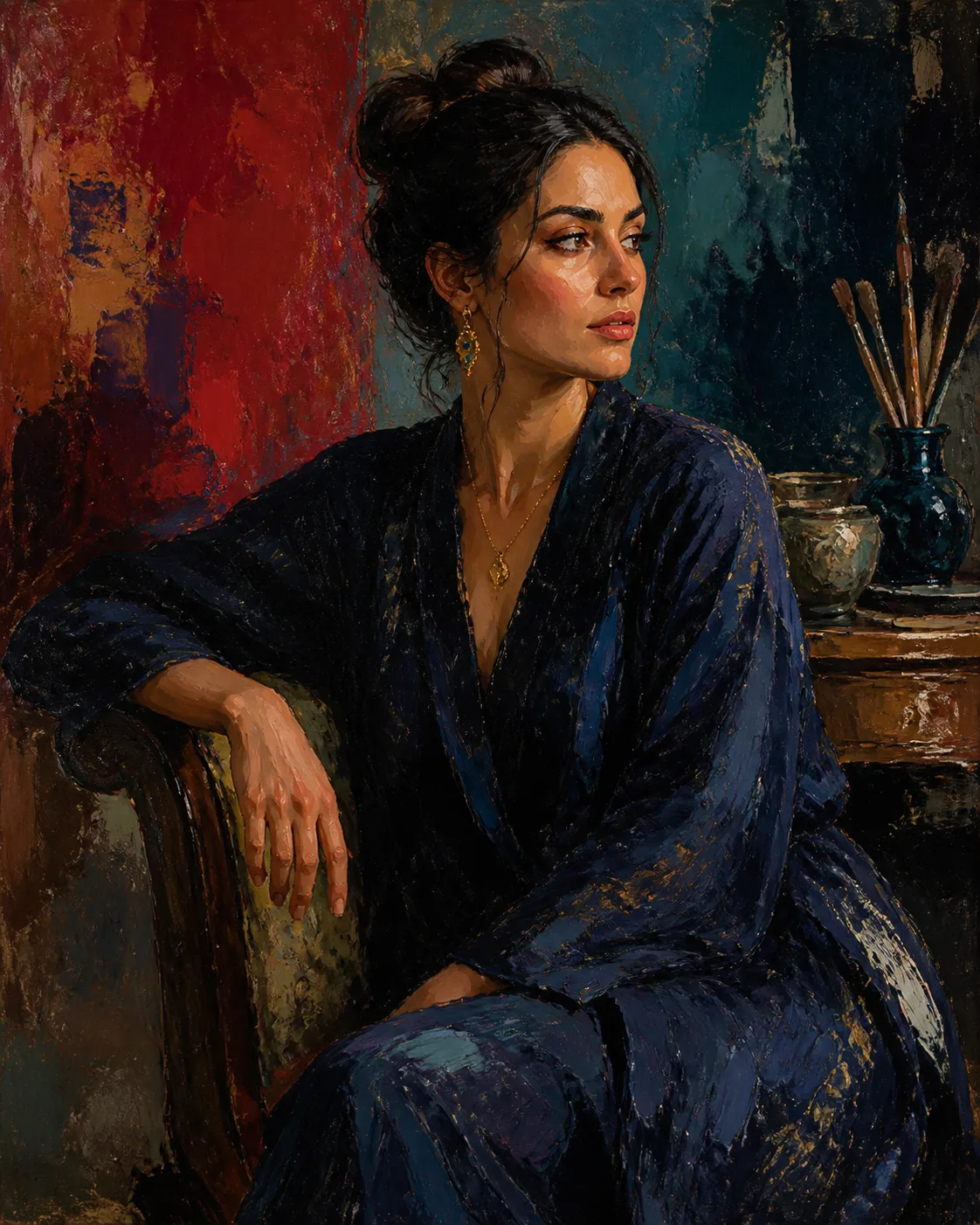
Visual characteristics
Turn a portrait, landscape, or still life into an oil-painting-style image with layered color, visible brushwork, and rich light and shadow.
Oil painting builds form with opaque pigment, layered color, directional strokes, and deep light-to-shadow transitions. The surface can feel tactile while the composition remains grounded in the source.
Subjects that suit this style
- Portraits with directional light
- Landscapes with distinct depth planes
- Still life arrangements and textured objects
Recommended reference images
- Use an image with strong large shapes and a readable value structure.
- Directional light helps brushwork describe facial or object volume.
- Avoid extremely busy scenes where every tiny object must remain exact.
How to apply the Oil Painting AI Filter
Choose a suitable reference
Use an image with strong large shapes and a readable value structure.
Add optional style preferences
If you have specific preferences, use the prompt box to describe the look you want and any people, composition, or product details that should stay unchanged. Leave it blank to use the default style.
Generate and review
Review the displayed credit estimate, submit the task, then check the generated result in Workspace.
What the Oil Painting AI Filter changes
Texture, edge handling, color mixing, and highlights become painterly; backgrounds may simplify while important forms gain heavier modeled strokes.
Limits to review
Fine text, glossy labels, and photographic micro-detail are not reliable. Brush interpretation may alter small accessories and exact facial contours.
Suitable use cases
- Classical or expressive portraits
- Gallery-style landscapes
- Editorial still life and commemorative artwork
Compare related styles
Try another style when the subject or intended use needs a different look.
- Watercolor — Painting
Style questions
- What defines this visual style?
- Layered opaque color, visible stroke direction, modeled volume, and selective edge softness distinguish an oil-painting treatment.
- What kind of image works best?
- Choose a well-composed image with strong light and shadow, clear large shapes, and enough resolution to guide facial or object form.
- What will change in the source image?
- Texture, edge handling, color mixing, and highlights become painterly; backgrounds may simplify while important forms gain heavier modeled strokes.
- Which details need the closest review?
- Fine text, glossy labels, and photographic micro-detail are not reliable. Brush interpretation may alter small accessories and exact facial contours.
- What is this style useful for?
- Common uses include Classical or expressive portraits; Gallery-style landscapes; Editorial still life and commemorative artwork. Choose another style when the subject or final use needs a different medium, level of realism, or visual emphasis.