

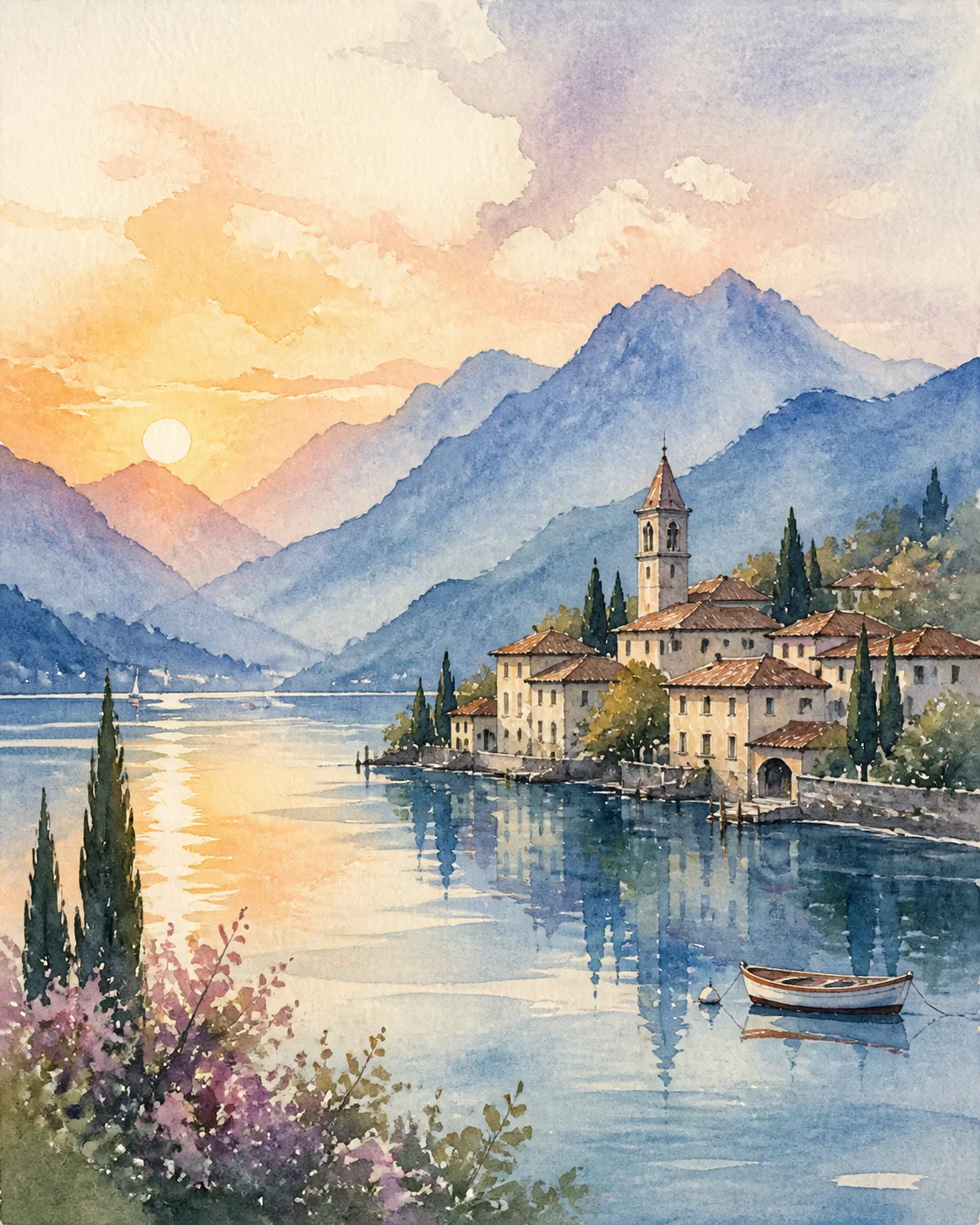
Visual characteristics
Turn a portrait, travel scene, or object photo into watercolor artwork with translucent color, soft edges, and visible paper texture.
Watercolor uses transparent pigment, pooled color, uneven edges, reserved highlights, and the texture of paper. Detail is suggested through layered washes rather than rendered with photographic precision.
Subjects that suit this style
- Flowers, food, and organic objects
- Travel scenes and quiet architecture
- Portraits with soft light and simple clothing
Recommended reference images
- Choose an image with a clear silhouette and a limited number of focal details.
- Soft daylight and uncluttered backgrounds translate well into transparent washes.
- Avoid relying on tiny text, hard mechanical detail, or exact surface markings.
How to apply the Watercolor AI Filter
Choose a suitable reference
Choose an image with a clear silhouette and a limited number of focal details.
Add optional style preferences
If you have specific preferences, use the prompt box to describe the look you want and any people, composition, or product details that should stay unchanged. Leave it blank to use the default style.
Generate and review
Review the displayed credit estimate, submit the task, then check the generated result in Workspace.
What the Watercolor AI Filter changes
Hard photographic edges become brush transitions, color may bleed beyond contours, and backgrounds may simplify into paper and wash textures.
Limits to review
Watercolor intentionally reduces precision. Product labels, typography, exact geometry, and subtle facial identity can soften or disappear.
Suitable use cases
- Editorial and book illustration
- Invitations, menus, and botanical artwork
- Travel memories and gentle portrait treatments
Compare related styles
Try another style when the subject or intended use needs a different look.
- Oil painting — Painting
Style questions
- What defines this visual style?
- Translucent washes, pigment variation, paper grain, and selectively unfinished edges create the sense of a painted watercolor.
- What kind of image works best?
- A bright image with one clear subject and moderate contrast gives the model enough structure without fighting the softness of the medium.
- What will change in the source image?
- Hard photographic edges become brush transitions, color may bleed beyond contours, and backgrounds may simplify into paper and wash textures.
- Which details need the closest review?
- Watercolor intentionally reduces precision. Product labels, typography, exact geometry, and subtle facial identity can soften or disappear.
- What is this style useful for?
- Common uses include Editorial and book illustration; Invitations, menus, and botanical artwork; Travel memories and gentle portrait treatments. Choose another style when the subject or final use needs a different medium, level of realism, or visual emphasis.